Quicksort with duplicates (3-way) Explained: Tracing [2,2,2,1,2,3]
Trace 3-way partitioning on [2,2,2,1,2,3] to see how duplicate elements are isolated in the middle, preventing the O(n²) quadratic collapse of standard Quicksort.
CONCEPT BLOGS
Multi-phase guides with mental models, worked examples, diagrams, and real edge cases — the public form of Learnisim AI's conceptual learning. Read here; train it interactively in the app.
Trace 3-way partitioning on [2,2,2,1,2,3] to see how duplicate elements are isolated in the middle, preventing the O(n²) quadratic collapse of standard Quicksort.
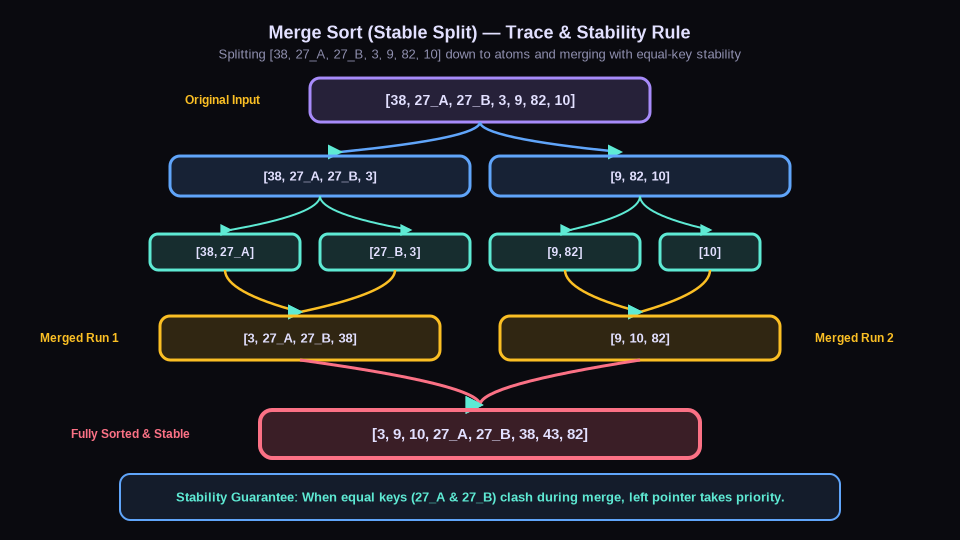
Master stable merge sort by tracing every split and merge step on [38, 27, 43, 3, 9, 82, 10] while preserving equal key order.
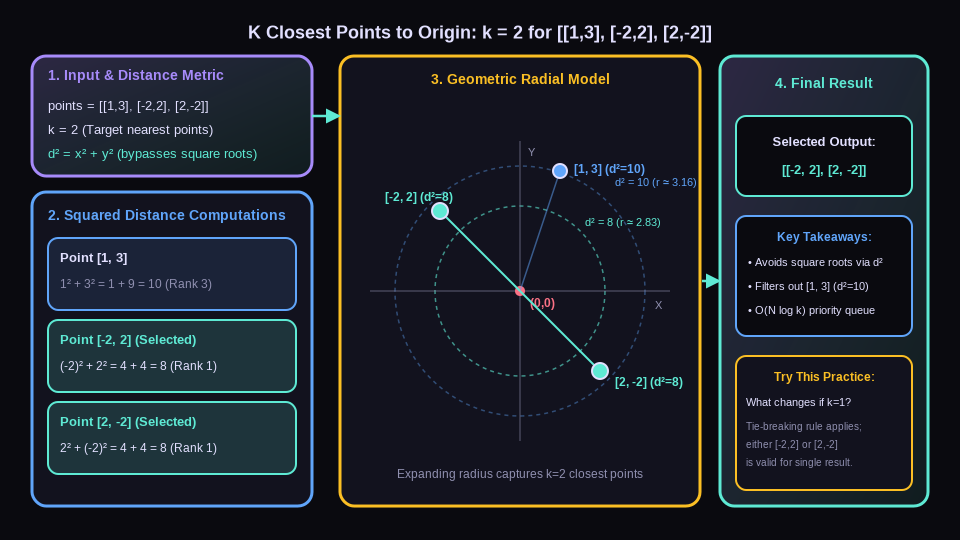
Learn how to find the K closest points to the origin by tracing [[1,3],[-2,2],[2,-2]] with a geometric distance mental model.
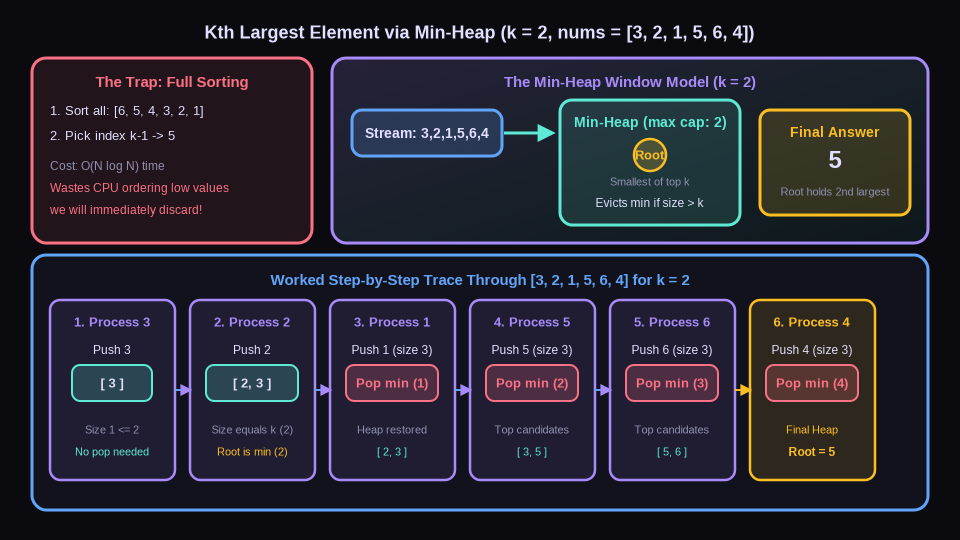
Learn how to find the 2nd largest element in [3, 2, 1, 5, 6, 4] using a min-heap window model. Master $O(N \log k)$ tracking without sorting the whole array.
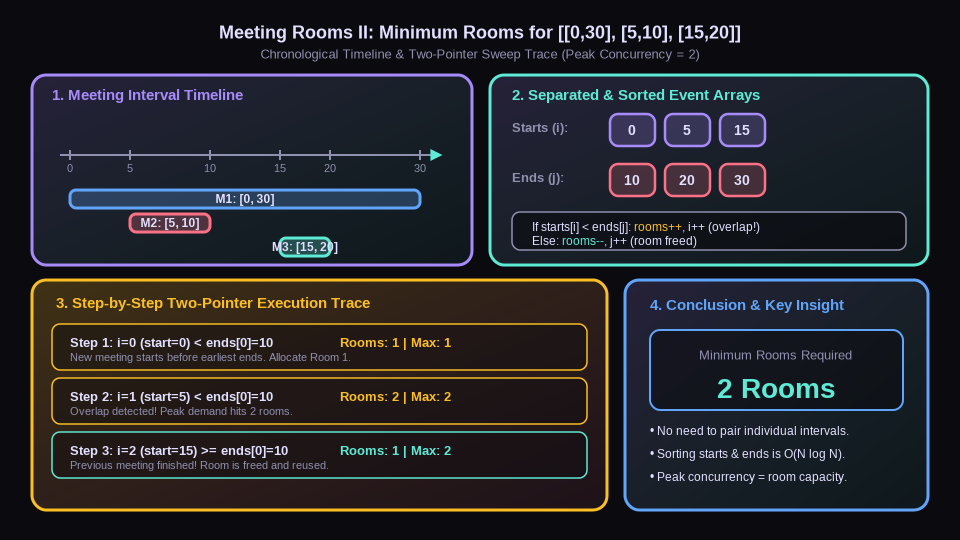
Learn Meeting Rooms II (Min Rooms) by tracing [[0,30],[5,10],[15,20]]. Master interval overlaps and min-heap allocation through a clear mental model.
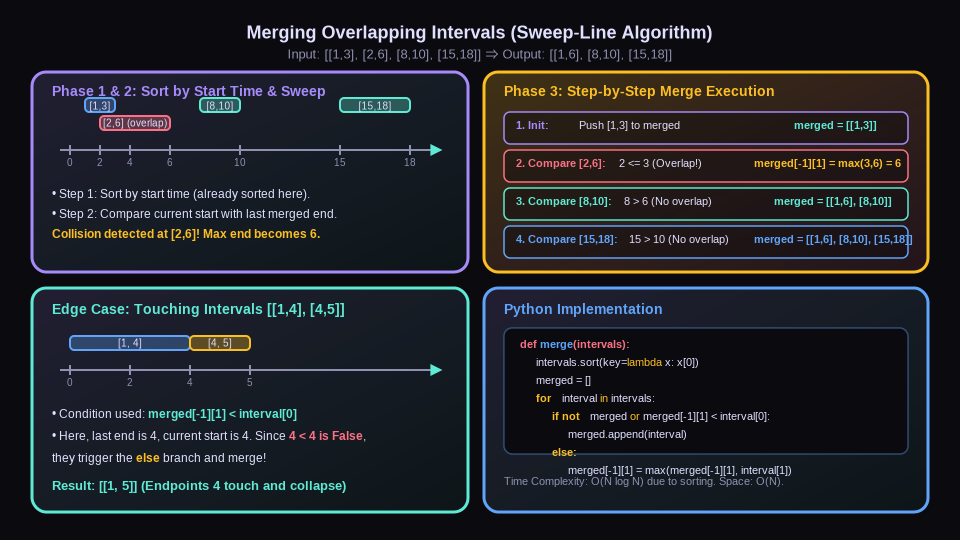
Master interval merging through mental models. Trace [[1,3],[2,6],[8,10],[15,18]] step-by-step and learn how sorting unlocks linear-time solutions.